仓王
Auction King is a multiplayer auction strategy game. On a future colony planet ruled by corporations, inspect clues, judge hidden asset values, and outbid rival players. Build your fortune from abandoned warehouses to skyscrapers, reach the orbital station, and compete for control of the colony.

Offers
What are keyshops?No offers tracked in PLN yet.
DLCs (1)

About 仓王
Corporations liquidate everything. You decide what any of it is really worth.
Auction King is a competitive auction game for 2–6 players, with matches lasting around five minutes.
On a corporate-ruled colony world, equipment from failed companies, sealed archives, contraband shipments, and rare collectibles constantly move through the auction houses. You and your rivals travel to different sites across the city, face the same unknown lot, and receive different fragments of information. Scan the grid, build a valuation, read the other bidders, then lock in a bid you can live with before the hammer falls.

9 Bidders, 9 Ways to Read an Auction

Characters are more than a bundle of stat bonuses. Each one changes how you gather information, hide your actions, or manage risk.
Zero | Hacker: Cannot actively use tactical items. Once per round, she can enter Intercept for 30 seconds or 30% of the round. Whenever another bidder uses an item during that window, she has a 20% chance to copy the result they receive. Three seconds after Intercept ends, her current bid is submitted automatically; if she has not locked one in, her bid counts as 0.
Yu | Mathematician: In Rounds 1, 2, and 3, he solves problems that estimate the total number of Purple, Gold, and Red items, in that order. In Rounds 3, 4, and 5, he receives the exact counts in the same sequence. Commit to an early read, or wait for the answers to correct it.
Bernoulli | Statistician: In Rounds 1–4, he samples 20% / 40% / 60% / 80% of the lot's cells, with a margin of error that falls from 30% / 20% / 10% to 0%. If he wins Leibniz's Manuscript, its value becomes six times the original.
Morgan | Auditor: In Rounds 1–3, she counts the number of items inside one unrevealed area. In Round 4, she learns the average footprint of every item in the lot.
Su Ying | Risk Trader: After winning an auction, the transaction settles at 1.00 / 1.25 / 1.50 / 1.80 / 2.10 times its value depending on the round, magnifying the final profit or loss. If her available value cannot cover the Overdrive settlement, the skill does not trigger.
Noya | Bounty Hunter: At the start of Round 5, she fully reveals targets previously marked by clues, exposing their complete item data. Every outline and rarity clue gathered across the first four rounds can become a final answer.
Gu Cheng | Crate Hunter: At the start of each round, he randomly selects 0–2 crates and reveals their rarity, outline, or complete data. If the lot contains a crate, he is often the first to spot it.
Li ?? Ping | Unknown Identity: Until settlement, the other players cannot see his bids or tactical-item activity. His actions still count; they simply stay out of everyone else's records until the hammer falls.
Dongdong | Software Engineer: Each round, she randomly samples cells equal to 5% of the lot's total capacity. When a sampled cell hits an item, its rarity is revealed to her privately.
Every Auction Takes You Somewhere New
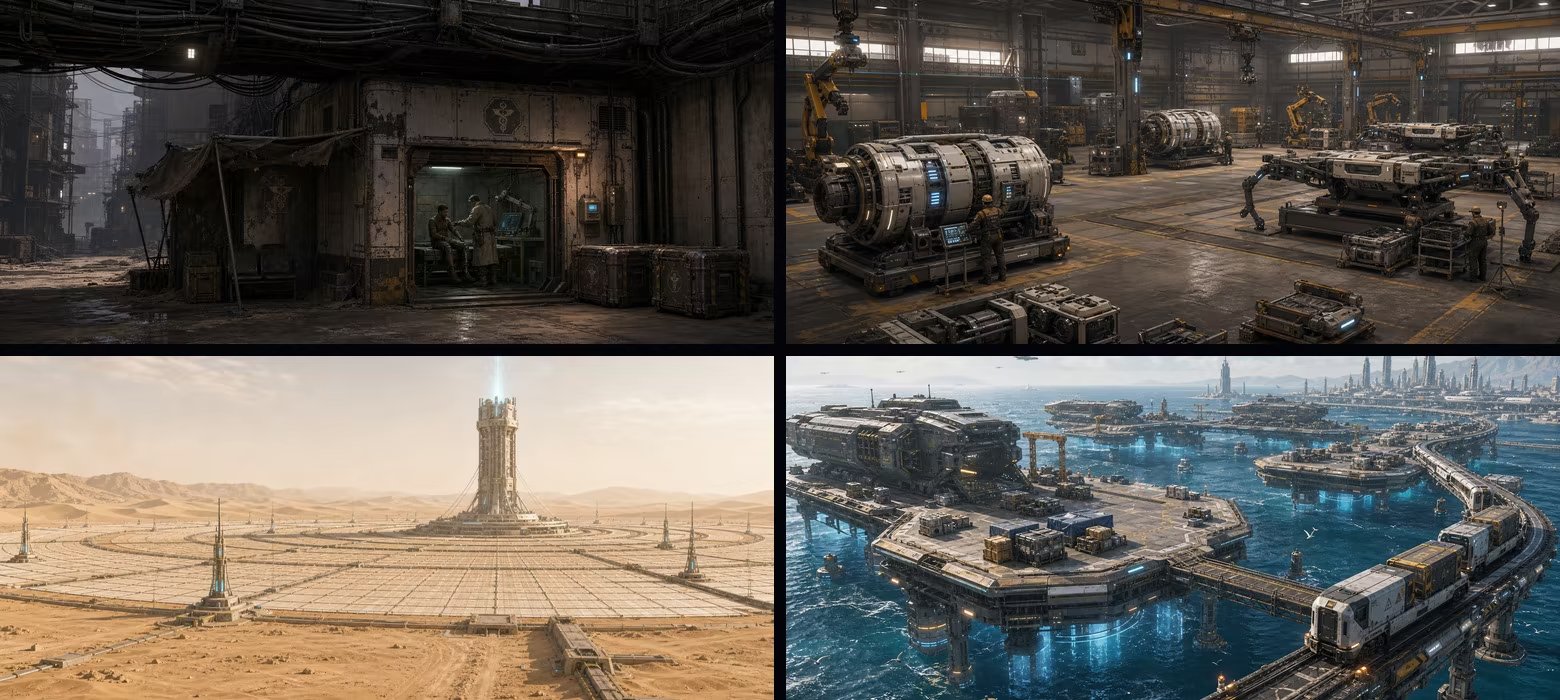
Your auction route climbs out of the Neon Slums, through crowded cyberware clinics and black-market storage banks, across the rust-choked pipes and megafactories of the Rust Belt, and into the Energy Wastes. From there, it rises to starport islands floating on the open ocean and, finally, to an orbital station above the colony. From street level to low orbit, the lights grow colder—and access becomes harder to earn.
A new location is more than a new backdrop. Lot size, asset mix, and risk profile all shift with it. The map itself changes how every valuation and every bid should be read.
What, Exactly, Are You Bidding On?

A photon cannon. A warp supercore. A private submersible. A vintage gramophone. Or perhaps the Yongle Encyclopedia, a miniature nano-reactor, the Zero Maglev Supercar—even a RELIC whose identity record has been erased. Every item has its own outline, footprint, and rarity. Its true name and value may remain hidden until after the hammer falls.
There is no value table you can simply memorize. You have to narrow the possibilities with limited evidence, then work out why everyone else at the table suddenly started raising their bids.
Don't Want to Overpay for the Lot? Pick a Protocol.
If the table has pushed a lot beyond what you think it is worth, you do not have to keep chasing it. Protocols let you stake your read on a different settlement condition: whether the winner profits or loses, which rarities dominate the lot, how close your bid comes to the final price, or whether you can win it yourself and turn enough profit.
◆ Profit / Insurance: Read the winner's final result. Profit pays a system dividend if the winner comes out ahead; Insurance pays if the winner takes a loss.
◇ Buyback / Backdoor: Buyback triggers when the winner's loss crosses its threshold and the lot contains a Gold-tier item or better, awarding a copy of one qualifying item at random. Backdoor targets Red-tier items, selecting one at random and settling for a percentage of its market value.
▣ Mid-Tier / Leak: Mid-Tier wagers on the combined share of Blue and Purple items, then settles against their total value. Leak requires a profitable winner and enough Gray, White, Green, and Blue items, paying a share of the winner's profit when it triggers.
◎ Near Miss: Worried you will not win the lot? If someone else takes it and your bid finishes close enough to the final price, you can still earn a settlement based on the magnitude of the lot's final profit or loss.
✦ Highlight: Trust your read? Back yourself. Win the lot and reach the required profit rate to earn an additional reward based on the transaction value.
Higher-level Protocols generally offer wider trigger ranges and stronger payouts—but the longer you wait to deploy the same Protocol, the more value it costs. Your choice depends on what you actually trust: the winner's judgment, the lot's rarity structure, or your own read.
Use Tactical Items on Your Terms
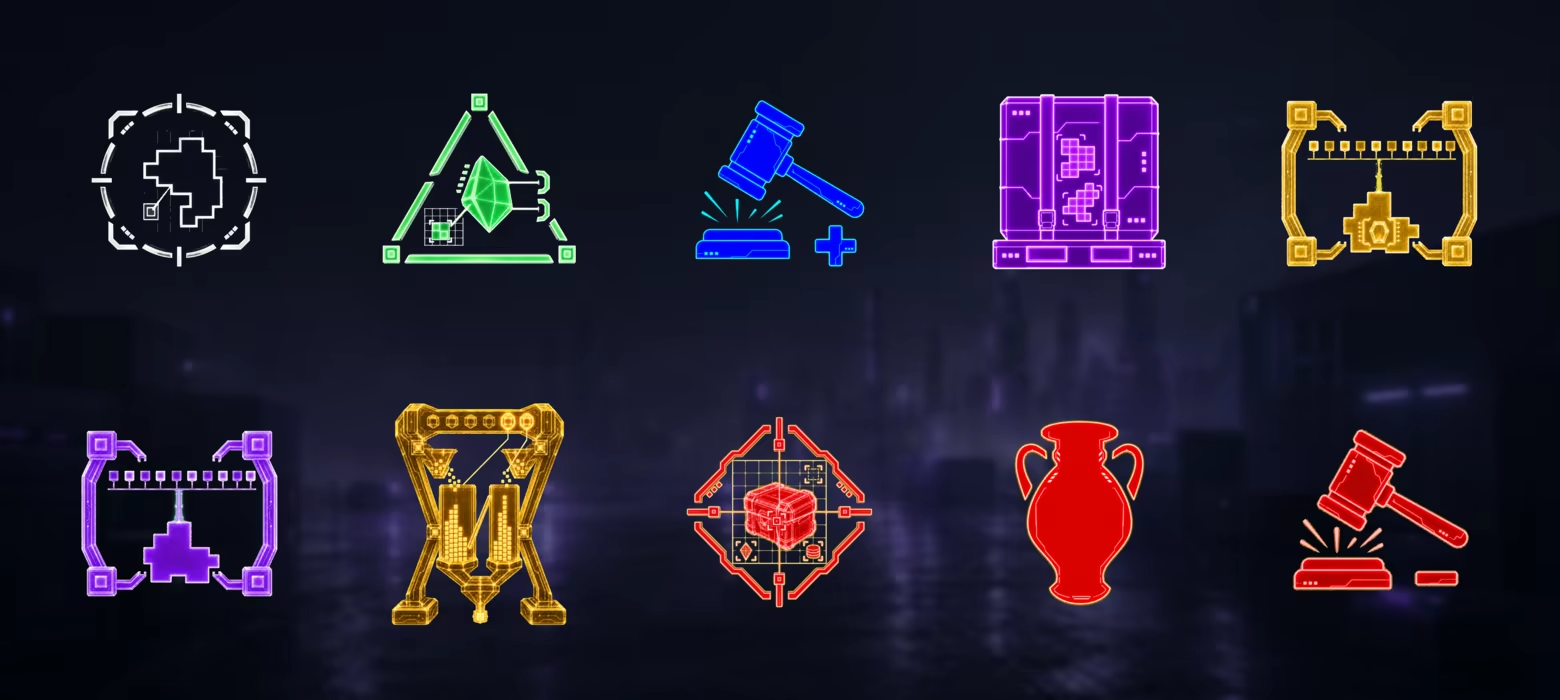
Each tactical item can be used only once per match. What matters is what you bring—and when you activate it. Outline Probes map an item's footprint, Appraisal Probes reveal only its rarity, and Reveal Probes expose its size, rarity, and current value. Precision variants select actual items instead of wasting scans on empty cells, while higher-rarity tools cover more targets.
Specialized tools attack the black box from stranger angles. Giant Detectors lock onto large targets, Last-Digit Detectors filter items by the final digit of their current value, High-Value Detectors track the most valuable targets in the lot, and Rarity Cell Counters use occupied cells and rarity ratios to reconstruct the lot's overall shape. None of them completes the valuation for you—but each one narrows the field.
You can also interfere with the hammer itself. Boosters and Suppressors of different rarities raise or lower the chance of the auction ending that round. Have enough information? Push for settlement. Need one more pass? Try to hold the hammer back. Higher-rarity items have stronger effects, and if several hammer effects are used in the same round, rarity determines the order in which they resolve.
Locked Crates and Appraisable Finds
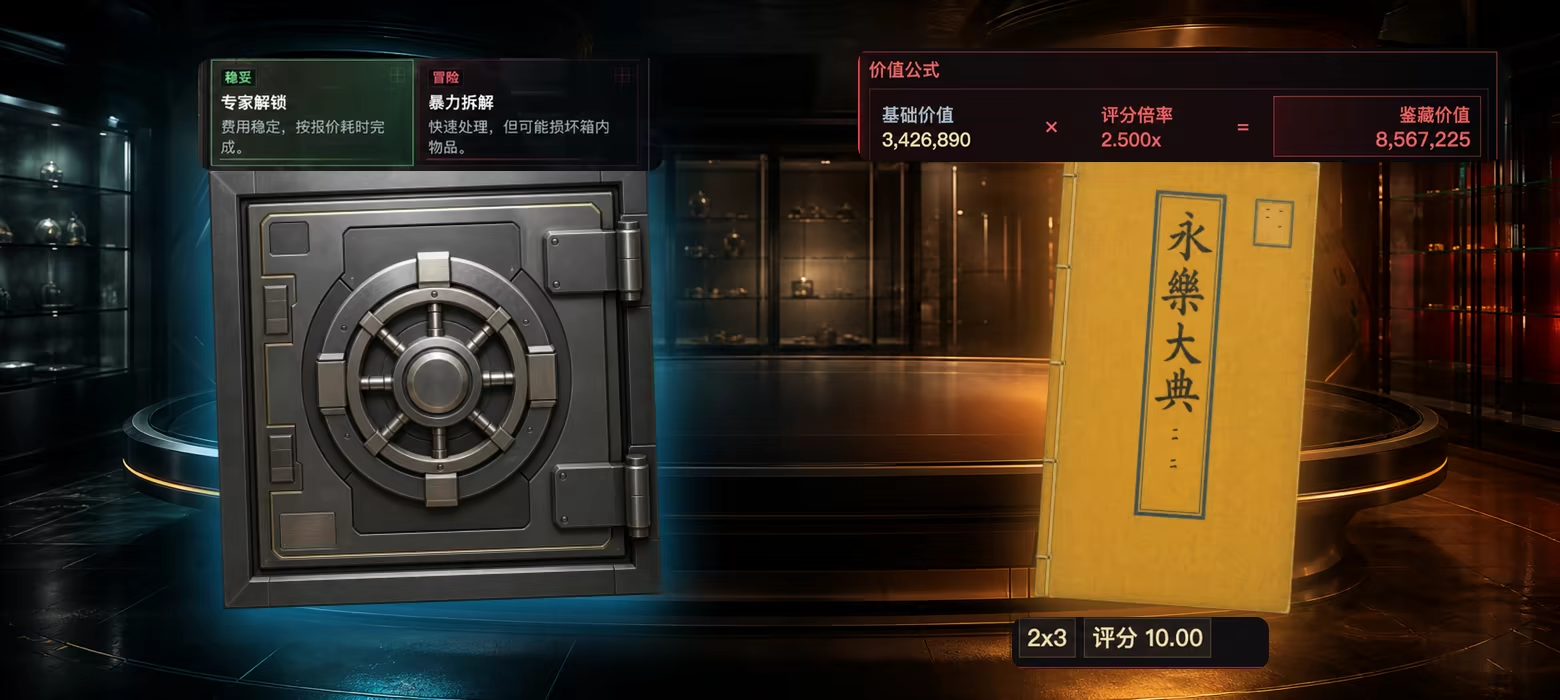
Not every item in a lot can be valued at a glance. You may uncover a locked crate—something that occupies real space in the lot while hiding another cache behind its lock. Win it, bring it back to your warehouse, and unlock it before its true contents are revealed.
You may also discover special collectibles with appraisal potential. Their current value is not the final word: send one to an appraiser to reveal its hidden grade, which then becomes a permanent part of that item. One appraisal can turn an ordinary haul into a display-worthy centerpiece—or overturn your first read entirely.
From a Room in the Slums to a Home Above the Clouds
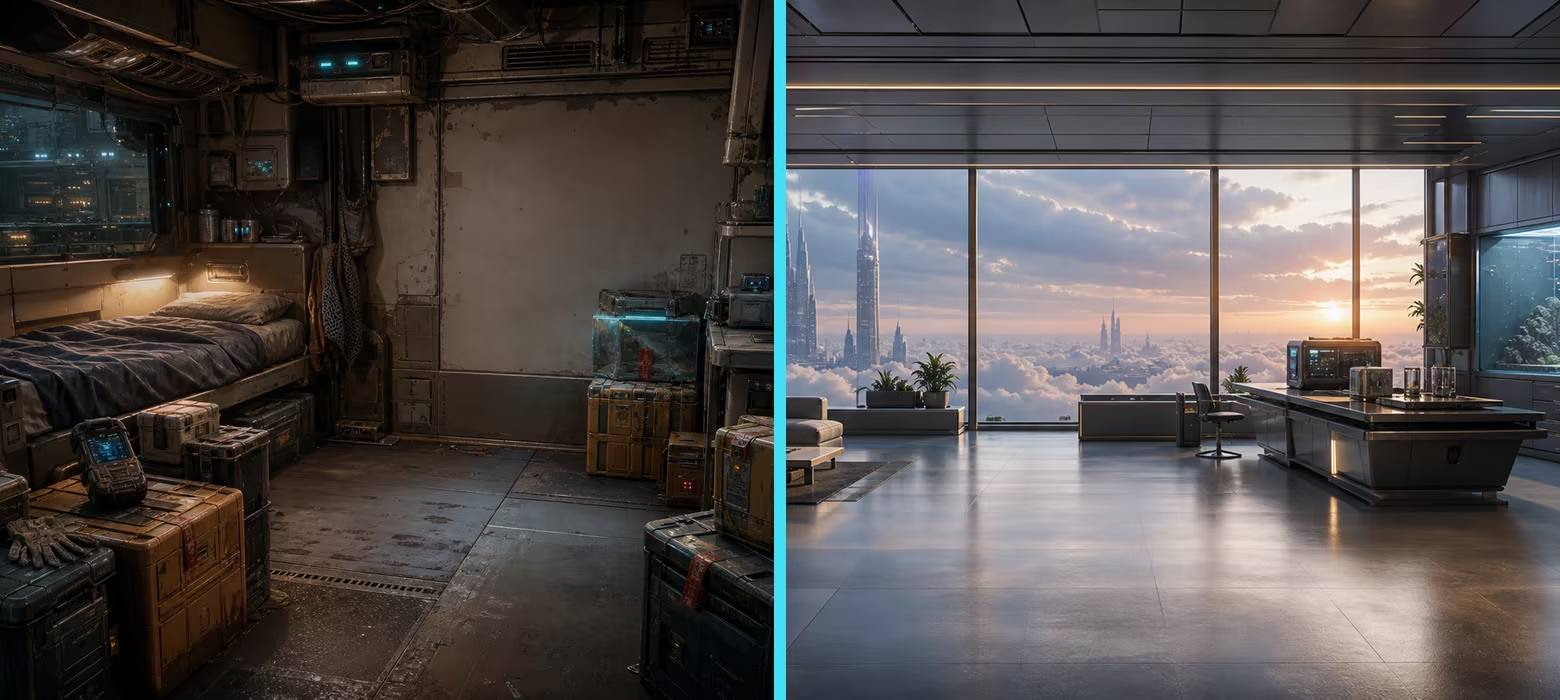
Organize your storage, sell assets, open crates, appraise collectibles, prepare your next loadout, and place highly rated finds in display cases. As your holdings and residence grow, you can expand your storage capacity and build new display spaces, turning a series of five-minute decisions into a long-term collection.
From a cramped room in the Neon Slums to a high-rise home above the clouds, every fall of the hammer can move you one step closer to the top of the city.
You will never know enough.
The question is: how high will you bid before someone else brings down the hammer?
Game details
Game details
Age ratings
Game modes
Languages
Audio & text: Simplified Chinese
Text only: English
Features
仓王 — frequently asked questions
When does 仓王 release?
Steam lists the 仓王 release date as Q4 2026.
How much will 仓王 cost?
No store has listed a price yet. Set a free price alert on this page and KingsPrice will email you when the first offers appear.
System requirements
Minimum
- Requires a 64-bit processor and operating system
- OS: Windows 10 64-bit
- Processor: Intel Core i3-8100
- Memory: 4 GB RAM
- Graphics: GTX 1050 Ti
- DirectX: Version 11
- Network: Broadband Internet connection
- Storage: 4 GB available space
Recommended
- Requires a 64-bit processor and operating system
- OS: Windows 11 64-bit
- Processor:
- Memory: 8 GB RAM
- Graphics:
- DirectX: Version 11
- Network: Broadband Internet connection
- Storage: 10 GB available space