Loading…

A detective's desk is your only tool. Read the files, run hands-on forensics, and question suspects in your own words—they lie, crack, and lawyer up. Wire the evidence board, then stake your badge on a written accusation. Get it wrong and Internal Affairs opens a file on you.

No offers tracked in PLN yet.


In DETECTIVE OS you work a homicide the way a real detective's desk works: a case file lands, a short list of suspects, and a screen full of tools. No waypoints, no glowing clues, no cutscenes telling you what to think. Read the evidence, run the lab, and question your suspects in your own words — then decide who you're willing to charge.
Get it right and the case closes. Get it wrong and Internal Affairs opens a file on you.

There is no dialogue tree. Type whatever you want and your suspect answers back in natural, conversational language — deflecting, rationalizing, contradicting themselves. Slide a document across the table and watch their stress meter spike. Push too hard on nothing and they lawyer up and walk. Corner them with the right evidence and the story finally cracks.
Everything lives on the desktop, and you have to actually use it:
Case files — dig through nested folders of reports, statements and photos.
Forensics lab — you don't click "analyze." You align the fingerprint, break the cipher, and calibrate the chromatograph yourself, against the clock.
CCTV, phone records & photo evidence — flag the timestamp, cross-reference the calls, drag the UV light across the print.
Locked & sealed documents — some files won't open until you've earned the code or unsealed them in interrogation.
Pin your suspects and clues to the evidence board and connect them with string — the board quietly tells you when a thread actually holds. When you're ready, you don't pick a name from a menu: you state your case in writing and stake your reputation on it. Accuse the wrong person and a new truth emerges — the guilty party, the evidence chain, and the killer's
In DETECTIVE OS you work a homicide the way a real detective's desk works: a case file lands, a short list of suspects, and a screen full of tools. No waypoints, no glowing clues, no cutscenes telling you what to think. Read the evidence, run the lab, and question your suspects in your own words — then decide who you're willing to charge.
Get it right and the case closes. Get it wrong and Internal Affairs opens a file on you.
There is no dialogue tree. Type whatever you want and your suspect answers back in natural, conversational language — deflecting, rationalizing, contradicting themselves. Slide a document across the table and watch their stress meter spike. Push too hard on nothing and they lawyer up and walk. Corner them with the right evidence and the story finally cracks.

Everything lives on the desktop, and you have to actually use it:
Case files — dig through nested folders of reports, statements and photos.
Forensics lab — you don't click "analyze." You align the fingerprint, break the cipher, and calibrate the chromatograph yourself, against the clock.
CCTV, phone records & photo evidence — flag the timestamp, cross-reference the calls, drag the UV light across the print.
Locked & sealed documents — some files won't open until you've earned the code or unsealed them in interrogation.
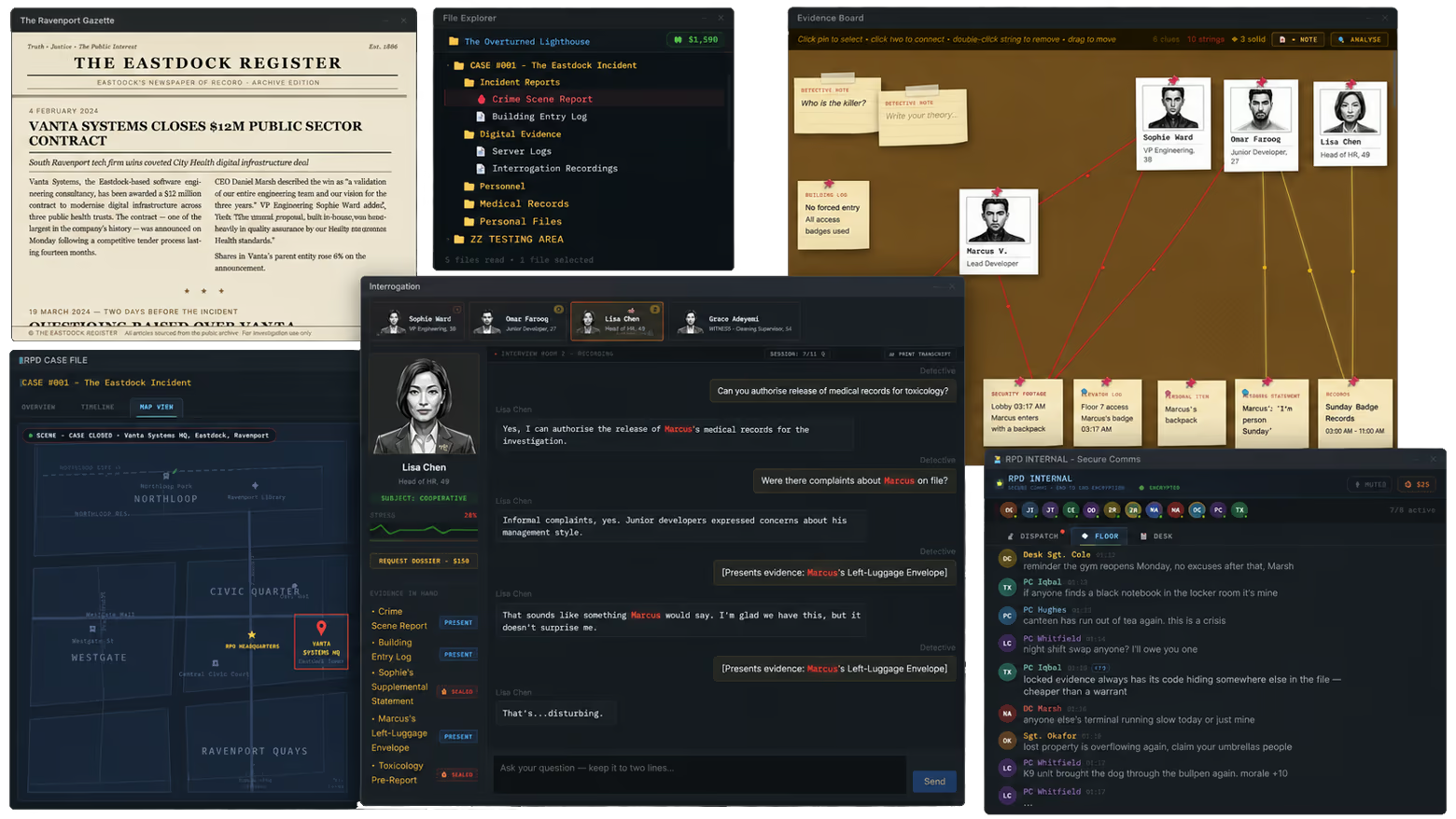
Pin your suspects and clues to the evidence board and connect them with string — the board quietly tells you when a thread actually holds. When you're ready, you don't pick a name from a menu: you state your case in writing and stake your reputation on it. Accuse the wrong person and a new truth emerges — the guilty party, the evidence chain, and the killer's story all change on your next run.
Between leads, the job keeps going. Draw your hourly wage, watch live dispatch traffic scroll across the internal comms, send a patrol unit across the city map to recover field evidence, and spend your pay in the commissary — or lose it at the precinct card table.
A rain-soaked, fictional port city in the Republic of Meridia, rendered as a CRT-era police OS — scanlines, a working world clock, weather on the taskbar, and a case that pushes back in real time with pressure emails and a mid-case twist.
Free-text suspect interrogations that respond to your questions and your evidence
Hands-on forensics, CCTV, phone-record and photo-analysis puzzles
A physical evidence board with string connections and a case-chain tracker
Written deductions with real consequences for a wrong arrest
Multiple guilty-party variants — reopen a solved case and the truth changes
A living precinct: salary economy, patrol dispatch, commissary, side games
Fully playable in English and Arabic, with full right-to-left support
The case is open, Detective. The desk is yours.
Text only: Simplified Chinese