
Loading…

Grim Pulse: The First Blood draws inspiration from several modern action titles, blending stylish combat, cinematic storytelling, and an open-world structure into a multi-release story. It's based around the "First Vampire" from ancient times, times which have long since been forgotten.
Price history tracked since Jul 7, 2026 · vs all tracked offers.
Based solely on tracked price history — not purchase advice.
Tracked since Jul 7, 2026.
Steam Train Fest starts Jul 20, 2026
A fast-paced character action game where you transform mid-combat, chain stylish combos, and uncover a hidden vampiric system controlling a modern city.
Unleash powerful transformation states mid-combat to evolve your abilities in real time. Shift between forms to extend combos, adapt to enemy behavior, and dominate encounters with fluid, high-speed combat.
Chain light and heavy attacks, aerial sequences, dodges, and weapon transitions into seamless combat flows. Master timing, positioning, and execution to push your combat skill to its limits.
Wield multiple unique weapon sets that swap dynamically during combat. As you grow stronger, weapons evolve, altering not just damage, but how combos, finishers, and combat behavior function.
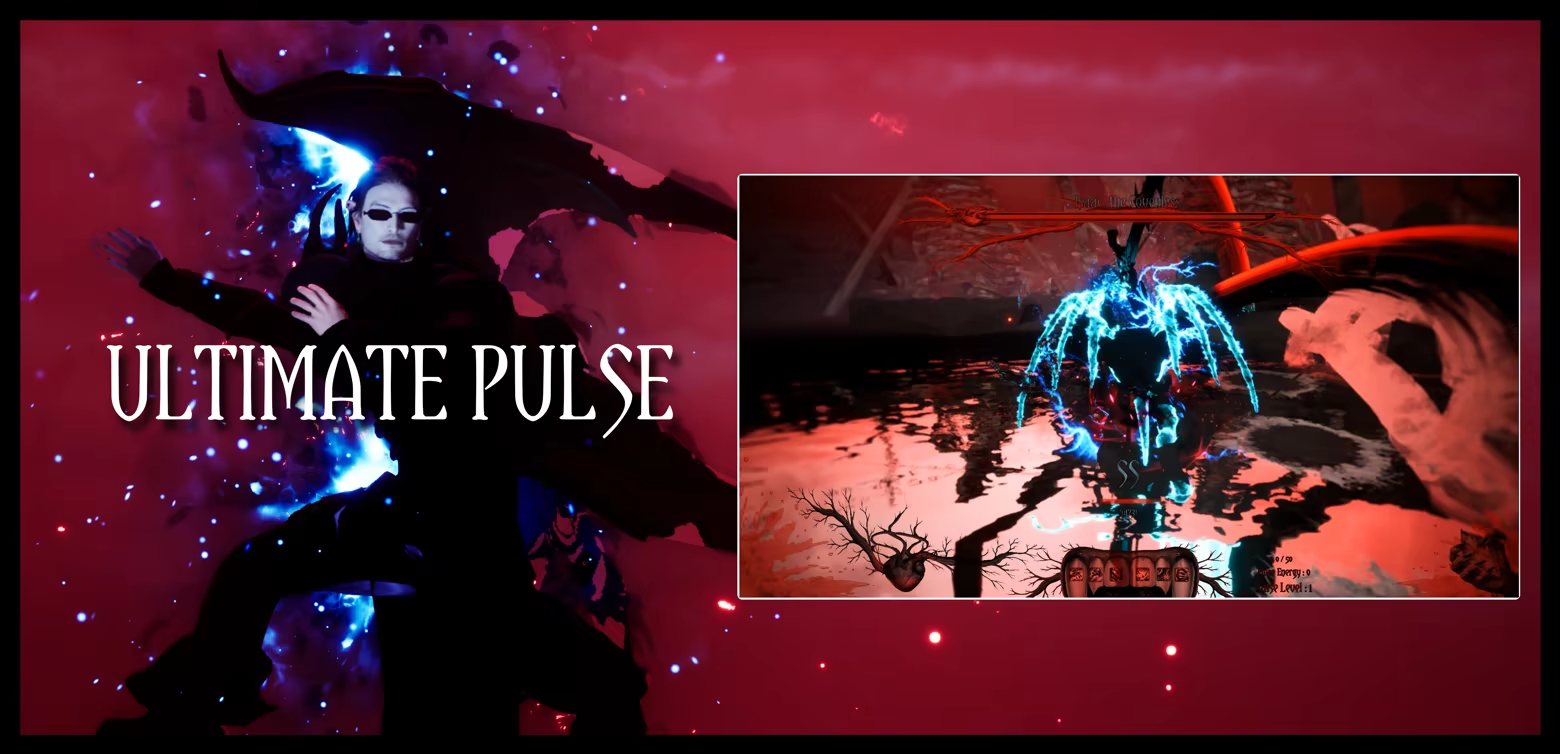
Trigger brutal, cinematic finishers and enhanced combat states that reflect your progression. Combat is not just mechanical, it is expressive and evolves alongside your mastery.
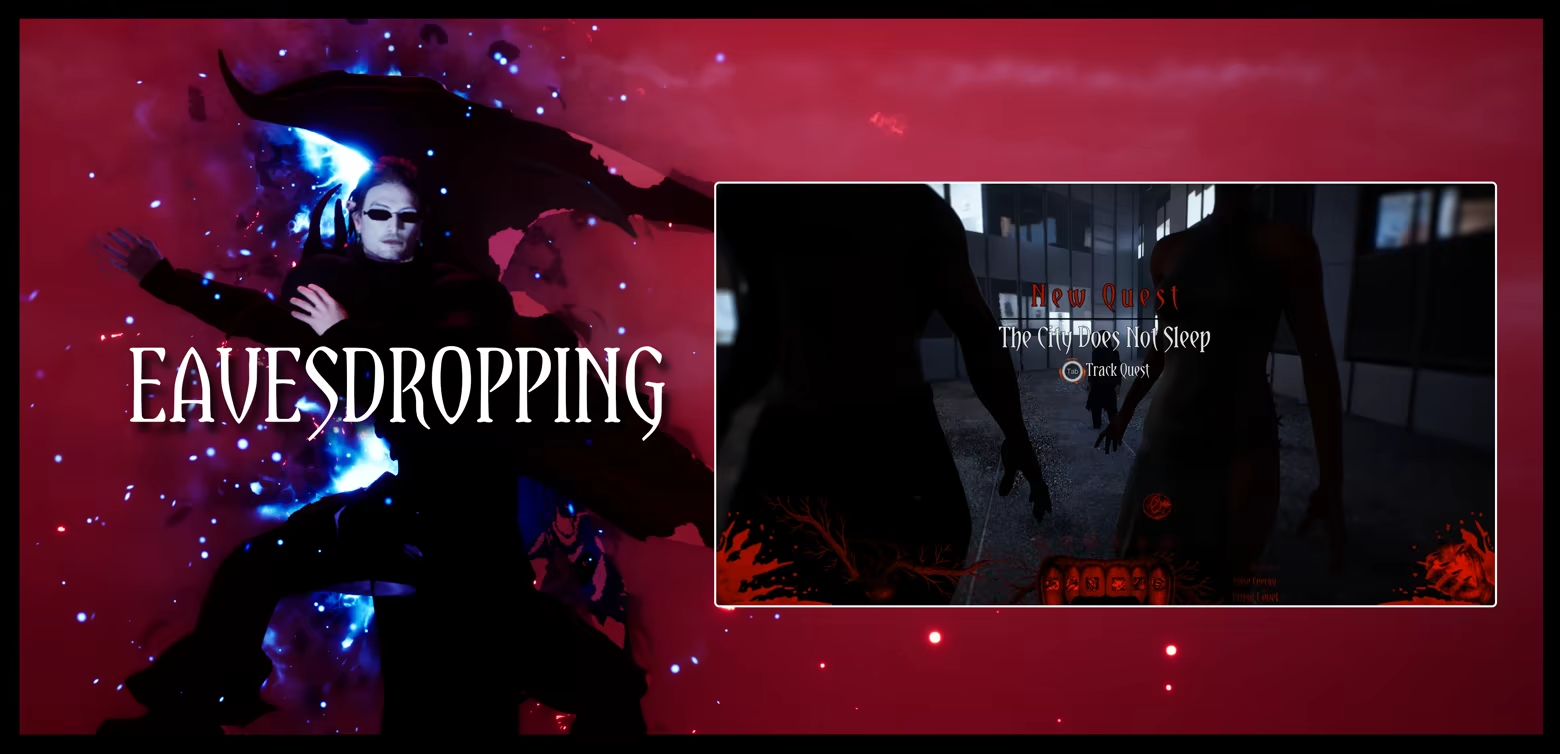
Listen in on dynamic NPC conversations throughout the city. Information is not given, it is discovered. What you hear can unlock quests, alter outcomes, or permanently close opportunities.
Conversations happen with or without you
Not all information is reliable
Missing details has real consequences
Explore a modern city inspired by New Orleans(WIP), built on top of a hidden, ancient system.
The Overworld: Active streets, social systems, and hidden power structures
The Underground City: A labyrinth with no guidance, navigation must be learned
The world exists independently of the player. You are not the center, you are part of it.
Control space, not just movement.
Rooftops offer visibility and strategic advantage
Streets expose you to danger and surveillance
Depth and elevation directly impact gameplay, combat, and information access
Vampirism is not a power fantasy, it is a persistent system shaping the world.
Structured through covens and hierarchy
Maintained through control, access, and fear
Embedded into the city’s infrastructure
Face powerful vampire factions controlling the city from above.
Three major covens dominate the skyline
Each tower is a multi-layered challenge
Progression unlocks memory, power, and truth
Battle through a wide range of enemies and bosses:
Overworld and underground mini-bosses
Multi-phase tower bosses
High-stakes encounters that test your mastery
Each victory reveals more than just progression, it reveals the world itself.
Story is not delivered, it is uncovered.
No forced exposition
Lore is fragmented, overheard, and implied through the cities
Truth must be pieced together through action and attention
The world does not wait.
Quests can change or disappear
Information can be missed
Outcomes persist based on your actions
Every decision carries weight.
Experience a narrative supported by a large set of handcrafted cinematics that enhance key moments without interrupting immersion.
No constant markers, no forced direction.
Learn through observation
Navigate through memory and experience
Discover paths others may never find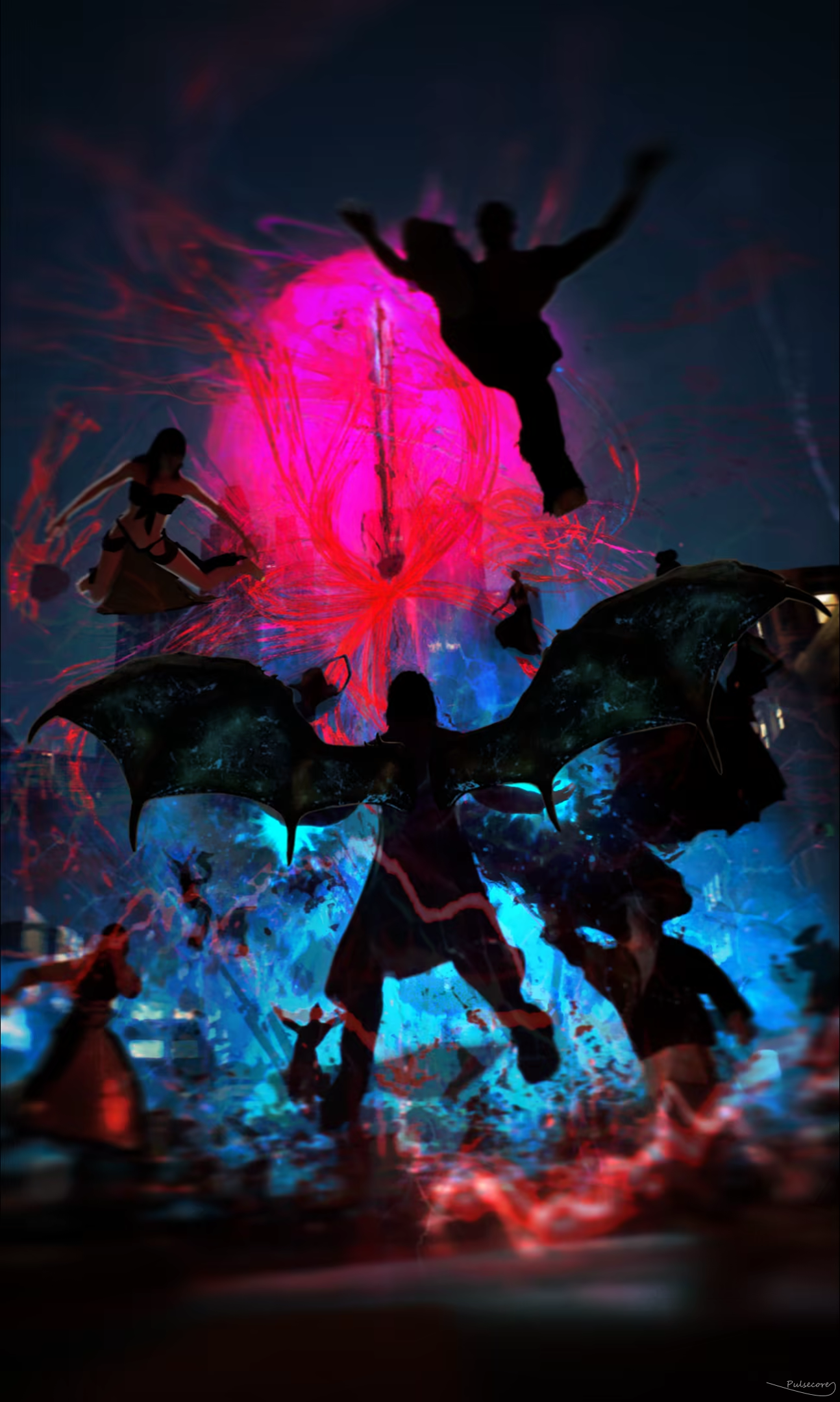
While I can't give out my post process settings I can say the below~
Set your Sequencer shot up for 12 FPS, then keyframe 360 frames
Add your particle systems, and system deactivate 15 frames before 000, and then place activate where needed
Export as EXR or PNG
Choose 10-14 frames
//Use blend by screen space, additive, and multiply as needed
//Top two levels should be at 40% opacity
//On the third to last layer, convert this to a painted look with displacement options
GP: TFB draws inspiration from several modern action titles, blending stylish combat, cinematic storytelling, and an open-world structure into a multi-release story. It's based around the "First Vampire" from ancient times, times which have long since been forgotten. "The First Blood" arc takes place in the middle of the story itself, with Aelthar waking into what he assumes is the "real world" whereas in fact it is still an awakening state from the Eternal Sleep he was placed into over 9,743 years ago.
Grim Pulse: The First Blood is set place in a modern era city, with hints of New Orleans Soul scattered throughout it in the sense of surroundings, environmental audio built into one of the centric features of Grim Pulse, Eavesdropping. You'll find there are conversations, hundreds, potentially thousands of conversational dialogs throughout the city itself, all bleeding knowledge of different types.
One of the biggest motives to creating this title is to open the world of modern day Vampyrism up to the masses, create knowledge based findings, teaching moments(have you seen Vampires of New Orleans - The Documentary?), and explore the modern world habitual while also providing entertainment.
Being a New Orleans native, this is centric in scope.
Grim Pulse: The First Blood is based on a linear quest series, but with vast open world elements. One massive city "above", and one massive city "below" which play pivotal roles in the sequencing of the series during Aelthar's awakening.
It was created to examine what happens when systems designed to protect humanity outlive the principles that justified their existence, and to fill the market gap with Vampiric titles, to date, there is no modern day vampiric title that is set in a truly open and explorable world with cinematic story elements in tow.
That said, this is not a story about monsters rising from the dark.
It is a story about infrastructure that never shut down.
It's a different take on the Dawn of Vampirism, of Humanities Machina.
Reality itself was volatile. Civilization rose and fell not because of war or scarcity, but because the underlying structure of existence was inconsistent.
Humanity responded the only way it knew how.
It engineered a solution.
The Pulse Core was not magic, myth, or prophecy. It was a human-built calibration device, designed to normalize reality, to stabilize cause and effect, to impose continuity where none could be guaranteed. It was built with the confidence that intelligence alone was sufficient justification.
The Pulse Core worked.
For a time.
Then the calibration drifted.
The failure was not explosive. It was systemic. The Pulse Core did not destroy reality. It reinterpreted it. Boundaries between states collapsed. Physical law persisted, but meaning fractured.
From this malfunction emerged the Legion of Night. Not demons. Not curses. Aberrations born from misaligned calibration states. Some monstrous. Some almost human. All persistent in desire, consume. Nearly leading to societies ultimate collapse.
Vampirism was not an outcome that anyone planned.
It was a stable error.
It allows longevity.
It demands hierarchy.
It rewards fear.
Over time, vampirism became normalized for a time, and furthermore over time became hidden. Societies formed around it. Cities adapted. Power structures hardened. Rituals replaced ethics. Feeding became regulation. Immortality became administrative.
What began as an error became governance.
The Pulse never stopped.
It only changed hands.
He was human at the exact moment humanity realized it had lost control.
When the Legion of Night spread, Aelthar became something else, something hardened by regret. Not because he sought power, but because power required a counterweight. He fought the creatures spawned by the malfunction for over three hundred years.
Not as a savior.
As a corrective force.
He did not build a legacy. He reduced damage, as the only survivor of proper mind left from the site where the Pulse Core was created. Damage not caused by the Pulse Core, but Humanity itself.
Eventually, even that role became inconvenient.
Aelthar was put to eternal rest by what is now considered to be called "The Covens", a society above society. Not honored. Not remembered. Simply removed. A system stabilizing itself by eliminating friction.
Nine thousand seven hundred forty three years passed.
The world has reorganized.
Vampiric society has matured into something efficient and yet deeply unethical.
This is a world that no longer remembers why restraint mattered.
Aelthar does not return to stop an invasion.
He returns to a world that moved on without him. Forgotten him. Has no need for him.
He is not special because he is powerful.
He is dangerous because he remembers.
It is not psychological symbolism. It is a calibration layer, where suppressed states surface and unresolved errors bleed through from the real world itself. Aelthar is is a learning state while awakening to the real world, in doing so he is able to sense the blood around him, and mentally feed from their thoughts.
It's there thoughts that have built this dream world Grim Pulse: The First Blood takes place in.
This is where the Pulse still corrects itself.
Dreams are not visions.
They are diagnostics.
The player is never told this outright. They infer it through repetition, distortion, and silence. Grim Pulse does not explain its systems because explanation implies permission.
Understanding must be earned.
Exposition is avoided. Lore is not simply just delivered. It is overheard. It is implied. It is contradicted. Truth exists in fragments.
Silence is meaningful(Eavesdropping).
Implication matters. Not every truth is explained.
Not every character deserves clarity. This is intentional. The game does not guide the player toward comfort. It guides them toward responsibility(or otherwise, free-play mode wandering the city).
They are environments that exist independently of the player’s presence. NPCs speak to each other. They argue. They gossip. They plan.
The eavesdropping system allows the player to listen, but listening carries risk. Proximity matters. Being noticed matters. Information changes potential outcomes permanently.
Side Quests do not wait. Routes can close. Consequences persist.
You are not the axis of the world.
You are as a player are just a variable.
Rooftops are places of observation and control. Streets are places of exposure. The higher you are, the more you see, the more you see - the more you can find to hear. The lower you go, the more vulnerable you become opening you up to "The Covenless".
Movement is not freedom.
It is positioning.
Every climb implies risk when traversing the Underground City Network, this is based on New Orleans, the ground is not stable, and a underground city is not "natural".
Every descent implies consequence to the player with changing environmental elements.
It asks what happens when power survives longer than the values that created it.
This is a game about inherited systems, owned by "The Covens", and managed from the skies(skyscrapers). About responsibility deferred for so long it becomes invisible. About societies that function perfectly while doing something deeply wrong.
The player is not asked to save the world.
They are asked to confront it.
It rejects convenience as design. It rejects explanation as comfort. This game is being pushed into existence because some ideas cannot survive compromise, and this is one of those.
This is a brief high level overview of the novel, and Prequel Game to be released related to the Grim Pulse Universe.
The "Prologue" until "Chapter VI" is staged for the Prequel to Grim Pulse: The First Blood.
Before there were covens, there was curiosity.
Aelthar Vaelric was not born monstrous. He was born human, brilliant, disciplined, and unsatisfied with superstition. He lived in an age that worshipped structure: geometry, astronomy, mathematics, bloodlines. His society believed that power did not descend from gods, it emerged from understanding.
They were wrong only in scale.
Aelthar belonged to the scholars tasked with studying residual force, "Pulse", the invisible pressure that shaped matter, will, and life itself. They called it many things. None were correct.
The Pulse was not truly discovered.
It was invited by humanity, at their own peril.
The Pulse Core was built beneath stone older than language. A living engine, grown rather than forged, designed to resonate with the blood of those near it. It was meant to amplify will, refine thought, and simplify humanities aingst against one another with the notice of global prosperity.
It did not.
When the Core activated, it did not obey hierarchy, ritual, or command. It tested. Bodies ruptured. Minds collapsed. Time bent inward. Something not so unlike the modern days usage of Artificial Intelligence.
Aelthar did not flee. He couldn't, there was not enough time for escape.
He endured like the others prior to their falling, but ultimately Aelthar fell as well.
Not all creatures molded by the Pulse Core turned into monsters, some still resemble humans as well, Aelthar being one of those, the only difference is Aelthar's memories were still intact, and thus a small portion of his humanity.
Not because he was chosen, but because he refused to break.
When the chamber fell silent, there were no survivors to crown him "The First Blood".
Only echoes of screams wandering aimlessly into the night.
The transformation did not come with hunger.
It came with clarity.
Aelthar could feel blood the way others felt gravity, or air on their skin as the restless night blows by. He could still hearts, ignite veins, bend energy into obedience. The Pulse did not command him it seems, it recognized him.
And so he chose restraint. Restraint for those still human.
For centuries, he walked among the ruins left behind by the experiment, hunting what the Pulse had twisted beyond recovery. He erased abominations quietly. He did not rule. He did not reveal himself.
He believed power existed only to prevent catastrophe.
That belief would ultimately cost him everything, even when there is "nothing left", how could there be? Humans weren't meant to walk the world forever afterall.
Lisette was human when she met him.
Fearless. Curious. Brilliant in a way that frightened lesser minds. She did not worship him, Aelthar, she questioned him. Where others saw divinity, she saw burden.
He loved her because she did not beg for immortality, grovel for pity, or kneel under might.
When she asked to be transformed over the years, he refused.
When others transformed her anyway, he failed.
Lisette became something new, not merely vampiric, but an immortal architectural being. She understood systems. She understood that one guardian could not hold back the night forever.
She believed in structure.
She believed in governance.
She believed Aelthar was too merciful to last.
Imitation came before understanding.
Those who tasted fragments of Aelthar’s blood learned tricks, not mastery. They built covens, houses, orders, each claiming legitimacy. They revered Aelthar publicly and resented him privately.
He was proof that they were incomplete.
At a convocation meant to honor unity, they betrayed him.
They drained him not to kill him, but to divide him. They couldn't kill him afterall, he was and is truly immortal being merged with the Pulse Core itself.
When they removed his heart, the living conduit of the Pulse, they believed they were inheriting his authority.
However, they inherited only dependency.
Aelthar did not die.
He fell inward.
His body sealed into stasis, his consciousness fractured but not extinguished. The Pulse did not allow oblivion. It preserved him in dream, a looping reconstruction of memory, guilt, and unfinished purpose.
Civilizations rose.
New Orleans emerged, not by accident, but by convergence. A city receptive to memory, ritual, and layered authority. The perfect vessel.
The covens thrived.
The Council formed.
And the dream began to prepare him to once again walk on this Earth.
The city Aelthar awakens into is not real.
Not yet.
It is shaped by:
Corporate towers
Feeding routes
Surveillance
Hierarchies stacked vertically
He hunts in the dream because he cannot yet hunt in truth, feeding off the blood energy from the world of the living to gain understanding of the waking dream state he is in.
Each tower climbed sharpens his memory.
Each boss defeated peels away denial of access to the land of the living.
Each whisper brings him closer to waking.
Lisette watches.
She does not speak.
When the dream collapses, Lisette finally appears, not as enemy, not as lover, but as truth.
She confesses in the dream realm:
The covens were filters to information in the land of the living.
The Council are custodians to the real workings of The Covens in the natural world.
The dream was calibration for what is to come.
Aelthar was never meant to wake weak.
He was meant to wake ready, prepared for the real world, a new world, so different from the past.
Eight thrones.
Seven occupied.
One empty.
The Council does not fear Aelthar.
They fear what happens when restraint remembers itself, Aelthar remembers himself.
Each battle strips away illusion:
Control masquerading as order.
Memory rewritten as necessity.
Consent replaced with convenience.
Lisette stands at the end, not as villain, but as consequence.
New Orleans breathes.
The dream ends.
The Pulse stirs.
Aelthar rises, not as ruler, not as savior, but as Judgment.
The night does not belong to monsters.
It belongs to those who remember why restraint mattered.
And this time...
He will not sleep, for a reckoning is coming.

The skyline tells one story. Steel, glass, transit arteries, corporate lighting, and vertical ambition. But beneath it is a second architecture, one that predates the city civilizations around it, the nation, and even the idea of recorded history. This lower architecture was not symbolic. It was functional. And it was never fully dismantled.
It was not magic. It was not divine. It was a human creation device, engineered by a civilization that believed reality itself could be stabilized, calibrated, and preserved against collapse. This civilization did not see itself as ancient. It saw itself as permanent.
A convergence site.
A place where human intent, material engineering, and systemic regulation intersected. The ridges, mounds, and geometric layouts were not ceremonial.
They were alignment structures, designed to regulate flows of energy, information, and human activity. Poverty Point was one of several such sites across the world, but it was among the most refined. It functioned as a stabilizer for the Pulse Core network.
The Pulse Core was the culmination of that belief. A device intended to regulate entropy, preserve continuity, and prevent the cyclical collapse of civilizations. It worked, partially. And then it failed in a way that could not be undone.
It changed the rules by which power persists within it.
The Pulse Core fractured reality into survivable states. It allowed certain entities, behaviors, and systems to endure far longer than the values that created them. What emerged were not monsters in the traditional sense, but adaptive remnants. Beings and institutions capable of persistence without conscience.
Not a species. Not a curse. An ecosystem.
Aelthar Valeric was human when containment was still believed to be possible. He was part of the civilization’s final corrective effort, tasked not with conquest, but with suppression. For three hundred years, he fought the manifestations of the Pulse Core’s malfunction. Not to save the world, but to prevent it from stabilizing into something irreversibly broken.
Aelthar was sealed away. Placed into eternal rest. Not as a hero, but as an unresolved safeguard. He awakens nearly ten thousand years later.
The civilization surrounding Poverty Point has changed names, borders, and myths, but it has never left the footprint of the ancient system beneath it. Modern New Orleans exists because the land was already structured, connected underground to Poverty Point routed through the Mississippi River.
Trade routes, flood control, elevation, and convergence all trace back to decisions made by a civilization that no longer exists.
Vampirism, as it exists in Grim Pulse, is not treated as a gift, a curse, or an identity. It is a system state. A persistent condition maintained by fear, convenience, and institutional inertia. Covens form not around ideology, but around access. Corporate structures mimic ancient hierarchies through the Skyscrapers tower climb. Verticality becomes authority rendered in steel and glass.
At street level, life continues. Pedestrians argue, gossip, normalize the strange. News cycles frame disappearances and anomalies as crime, infrastructure failure, or coincidence. Most people live their entire lives within the surface narrative, never realizing the system beneath them is still active.
Each coven occupies vertical territory, both literal and social. Their power is not aesthetic. It is logistical. They exist because the Pulse allows them to exist, and because dismantling the system would require accountability they are unwilling to face. Aelthar's Rise.
It is not metaphor. It is not symbolism. It is a calibration space, a diagnostic layer where the Pulse allows Aelthar to evaluate deviation, performance, and instability. When Aelthar enters it, he is not escaping reality. He is being measured by the same system that once justified his removal, with the help of an outside guiding force.
It presents power as an inheritance no one was meant to receive and as result hard to balance over time, as the advancements require management. One moment you have all abilities unlocked, the next depending on your choices, not.
Combat, stealth, observation, and silence are not separate mechanics. They are expressions of the same underlying logic.
Restraint of redundancy is rewarded. Excess is punished. Lore is uncovered through proximity, implication, and contradiction.
The player is not asked to save the world. They are asked to confront the consequences of abandoning responsibility as Aelthar battles to regain memory and life itself.
It is an actively developed game with core systems already implemented, tested, iterated on, and publicly documented through ongoing devlogs.
At present, Grim Pulse is in a late prototype to early alpha stage, with all foundational pillars fully functional and undergoing refinement rather than invention.
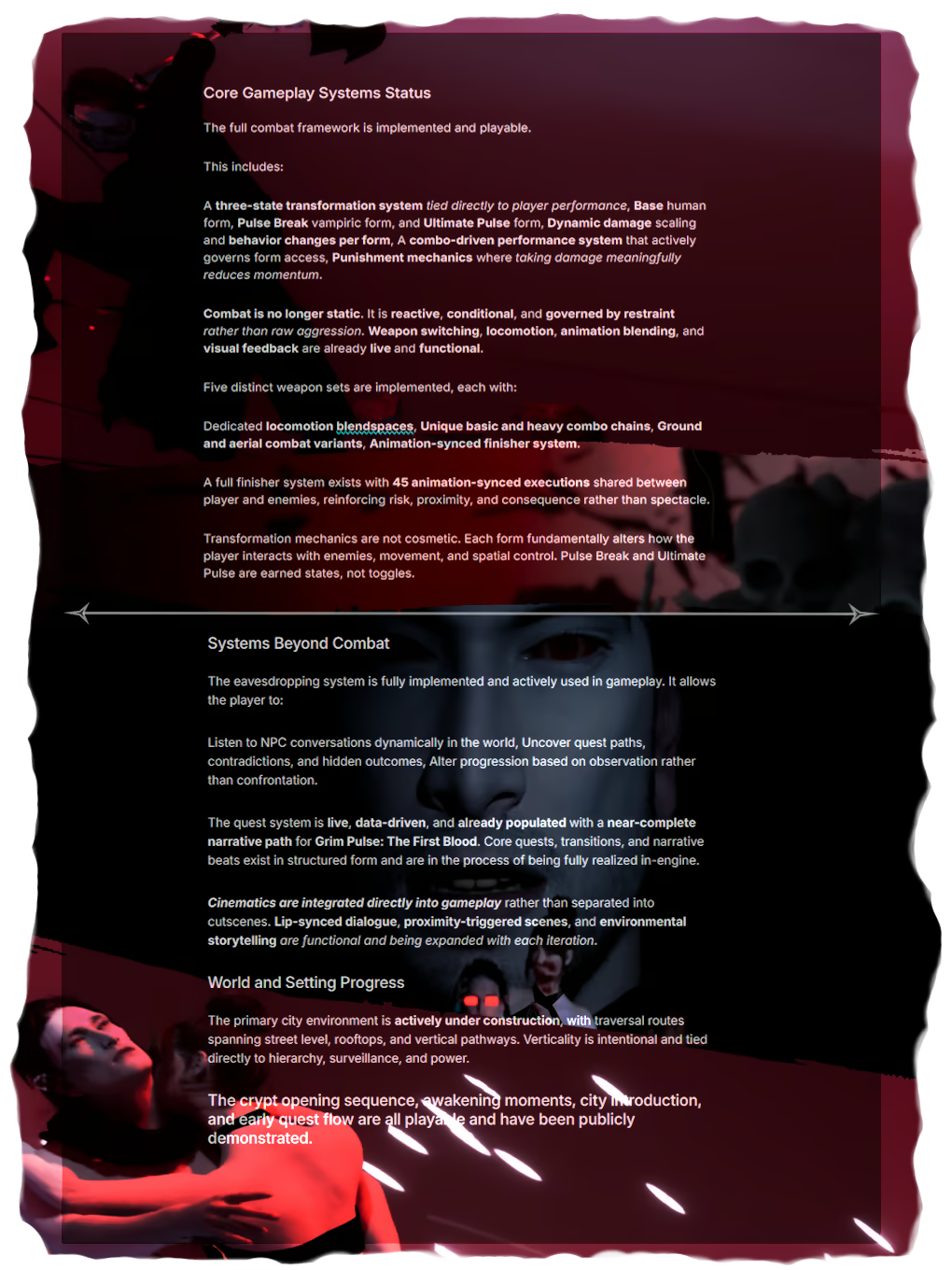

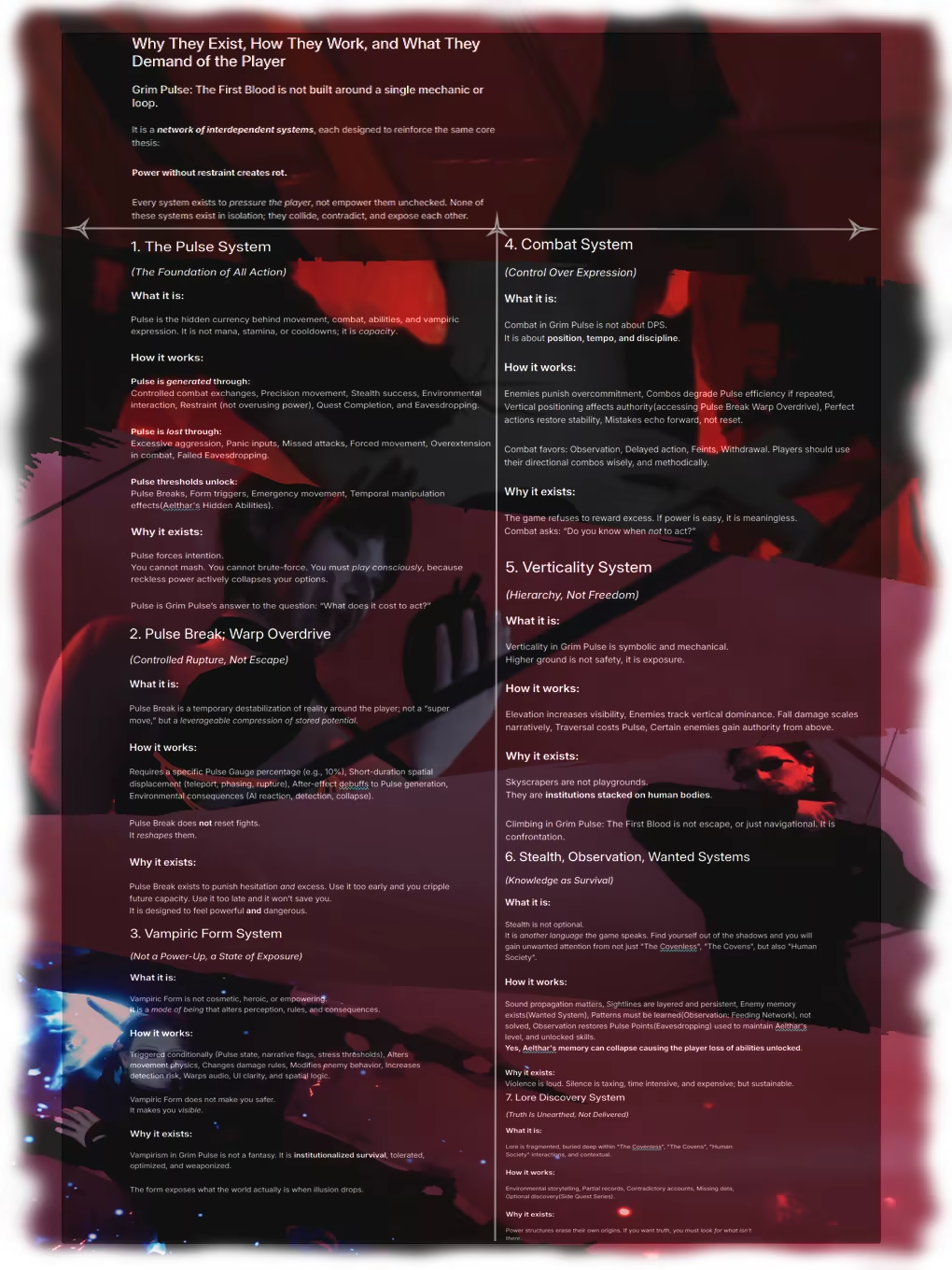
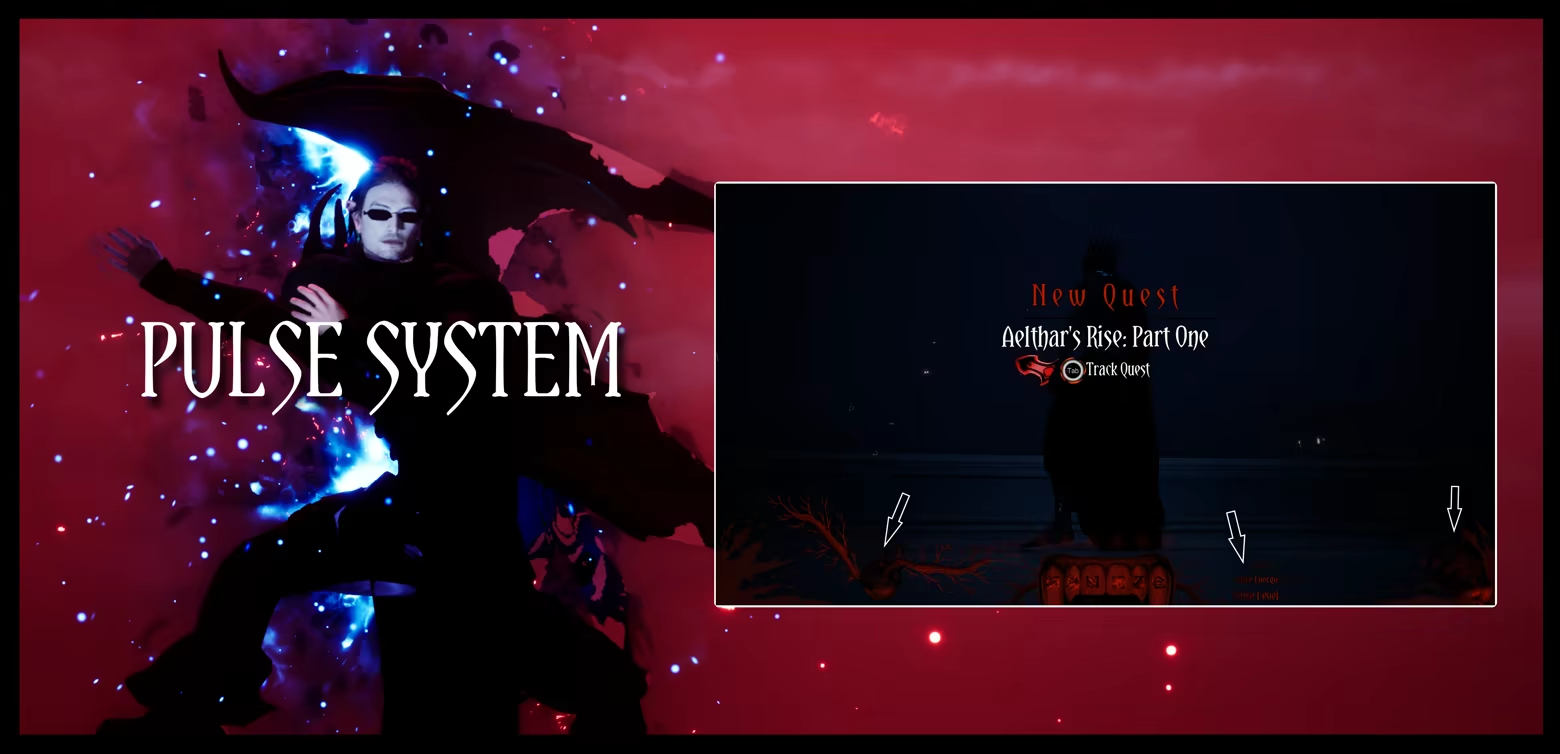
It is not a flavor mechanic. It is not optional world dressing. It is a core narrative and progression system designed to reward patience, observation, and silence over immediacy and force.
At its foundation, the system assumes the player is intelligent.
Eavesdropping allows the player to overhear conversations between NPCs dynamically in the world. These conversations are not just pre-packaged lore dumps or background noise.
They are active data sources that can: Alter quest progression, Unlock or close narrative routes, Reveal contradictions between characters and institutions, Expose lies, omissions, and power structures, Provide warnings or misdirection depending on context, Information is not granted automatically.
It must be earned through proximity, positioning, and restraint.
Conversations exist independently of the player. NPCs speak whether the player is present or not. The system monitors distance, line of sight, elevation, movement speed, and noise.
To successfully eavesdrop, the player must: Remain within a viable auditory range, Avoid rapid movement or aggressive actions, Maintain spatial awareness of patrols, sightlines, and environmental cover.
If the player moves too quickly, draws attention, or breaks the conversational bubble, the information is lost. Conversations do not reset or repeat for convenience. Missing information is a consequence, not a failure state.
Certain conversations only occur once.
Others evolve based on earlier player actions(Side Quests), creating layered dialogue that reflects systemic change rather than scripted branching.
Silence is not cosmetic in Grim Pulse: The First Blood. It is a condition.
The eavesdropping system reinforces this by making stillness a form of agency. Standing still, listening, and choosing not to intervene often provides more power than immediate action.
This design directly contrasts traditional RPG logic, where interaction is loud, explicit, and player-centric. In Grim Pulse, the world does not wait to be interrogated.
You are listening in on something that was not meant for you.
Not all information overheard is reliable.
NPCs lie. They speculate. They repeat propaganda. They misunderstand their own institutions. The system does not label truth. It presents perspective.
The player must decide: Who to trust, Which conversations matter, Whether silence is safer than exposure.
This creates a relationship between player and narrative where meaning is inferred rather than explained. The game does not resolve ambiguity for comfort.
Eavesdropping is deeply integrated with Grim Pulse’s other mechanics.
Quest System: Certain quests can only be unlocked, altered, or resolved through information gained via eavesdropping.
Stealth: Remaining undetected is often required to hear full conversations. Should you fail, Aelthar must pull his target into the Blood Realm to rip the thoughts from their mind.
Verticality: Height and positioning affect what can be overheard, reinforcing hierarchy and spatial power.
Combat Avoidance: Many encounters can be bypassed entirely by learning patrol routes, power dynamics, or internal conflicts through listening.
Combat is never the only solution. It is simply the loudest one.
Grim Pulse is not interested in testing reflexes alone. It is interested in testing judgment.
The eavesdropping system exists to: Encourage restraint over impulse, Replace exposition with inference, Make knowledge feel earned rather than granted, Reinforce the theme that power persists through quiet systems, not dramatic moments.
The system does not mark overheard information as “important” or “optional.”
If you miss something, the world continues.
If you act too soon, you may never know what you interrupted.
If you listen carefully, you may uncover paths that never appear on a quest log.
This places narrative responsibility on the player, not the UI.
The eavesdropping system embodies Grim Pulse’s rejection of power fantasy.
It asks: Can you wait? Can you listen? Can you accept not knowing everything?
In a game about systems that outlived their creators, the most dangerous act is often not violence, but lack of attention.
And the most powerful choice is sometimes to remain silent.
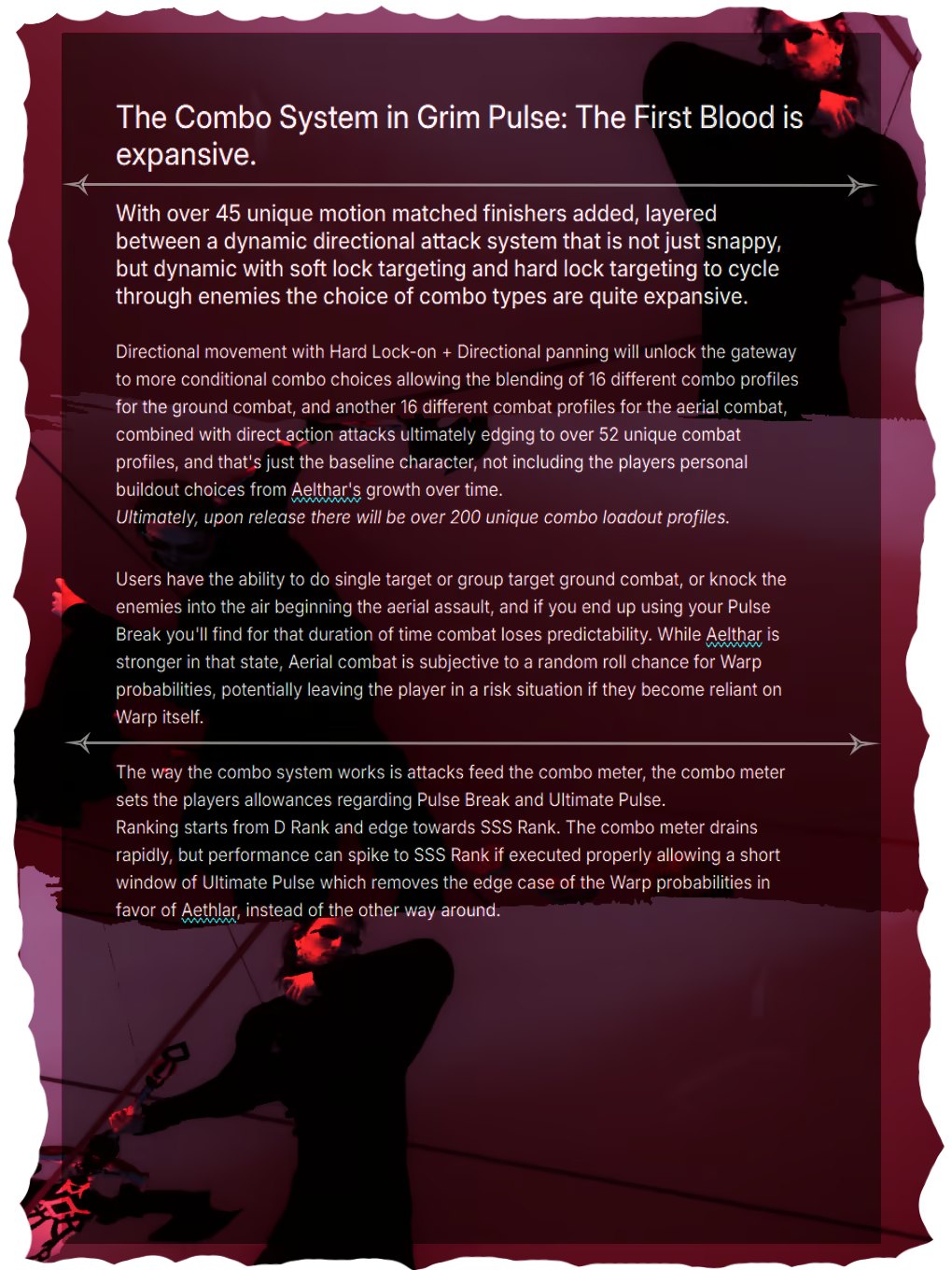
Movement: Thumbstick X/Y
Turn/Pan: Thumbstick X/Y
Jump: Controller Button A
Dodge: Controller Button B + Directional
Light Attack: Controller Button X + Directional + Hard Lock-on(Optional) + Jump(For Aerial Heavy Attack Combo)
Heavy Attack: Controller Button Y + Directional + Hard Lock-on(Optional) + Jump(For Aerial Heavy Attack Combo)
Hard Lock-on: Controller Right Bumper
Block: Controller Right Trigger
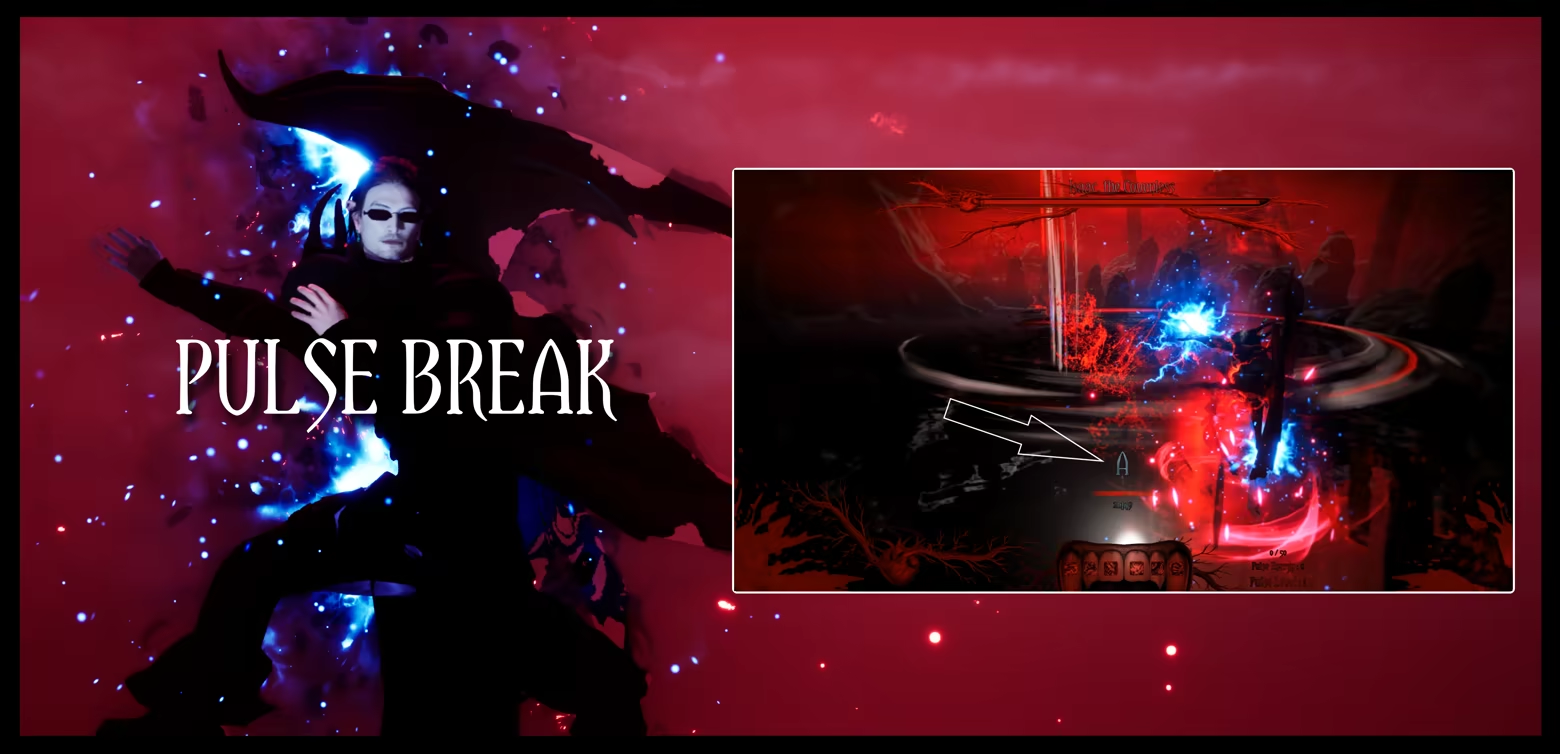
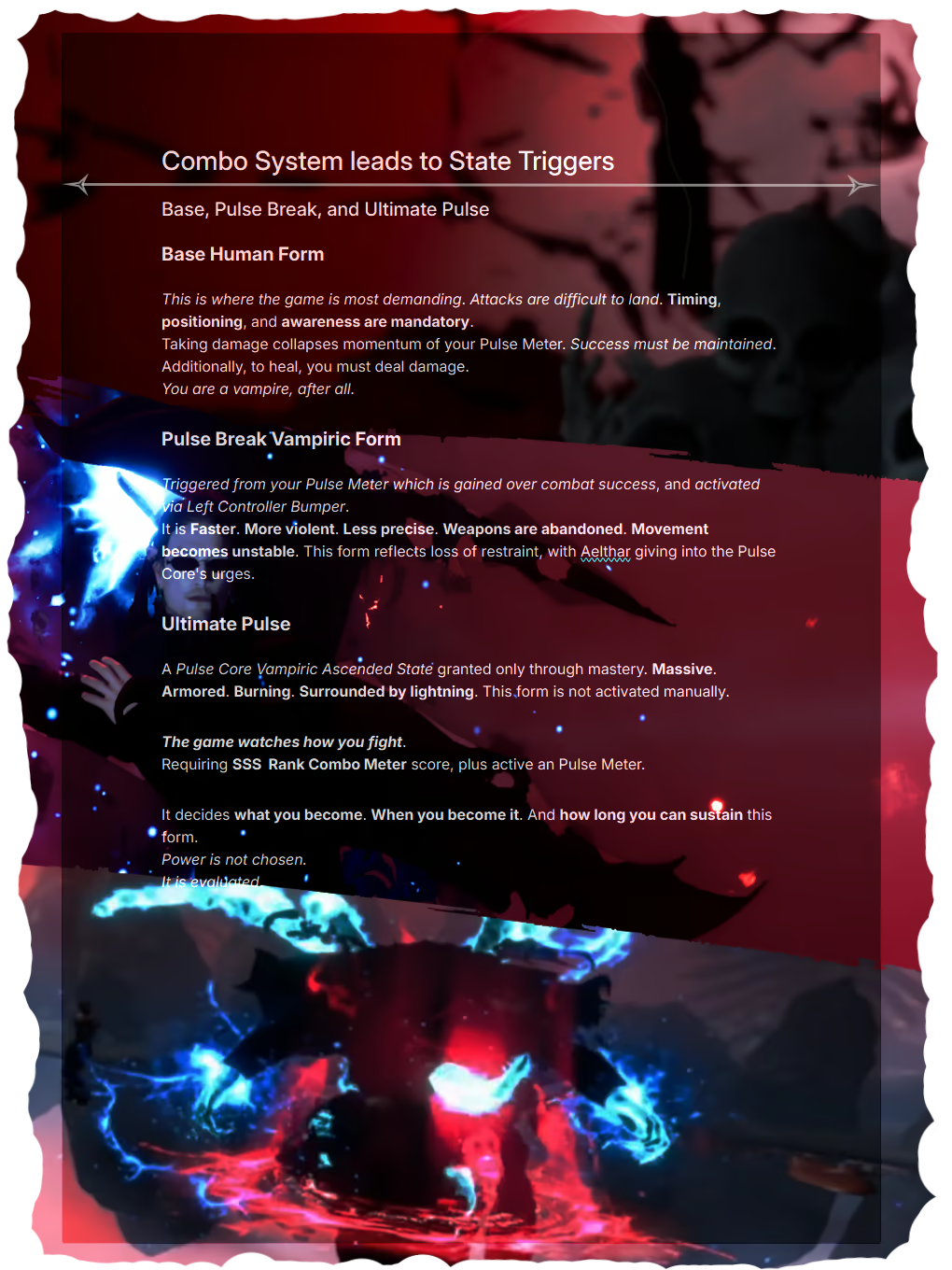
Pulse Break: Controller Left Bumper
As the player grows with Aelthar, his combat ability grows as well.
At first Aelthar has access to 5 base weapon sets.
"The Phantom Blade", "Legions Scythe", "Nightcrawler Pulse Blades", "Aelthar's Regalia", and "Hatchet's of Eternity"
During combat, these weapons dynamically swap in and out, as Aelthar is a ancient master of combat from the 300 years of battling the Legion of Night over 9,743 years ago, even in his weakened state.
As Aelthar grows, the weapons will also modify with unique properties based on the players chosen progressive build out and stat allocation.
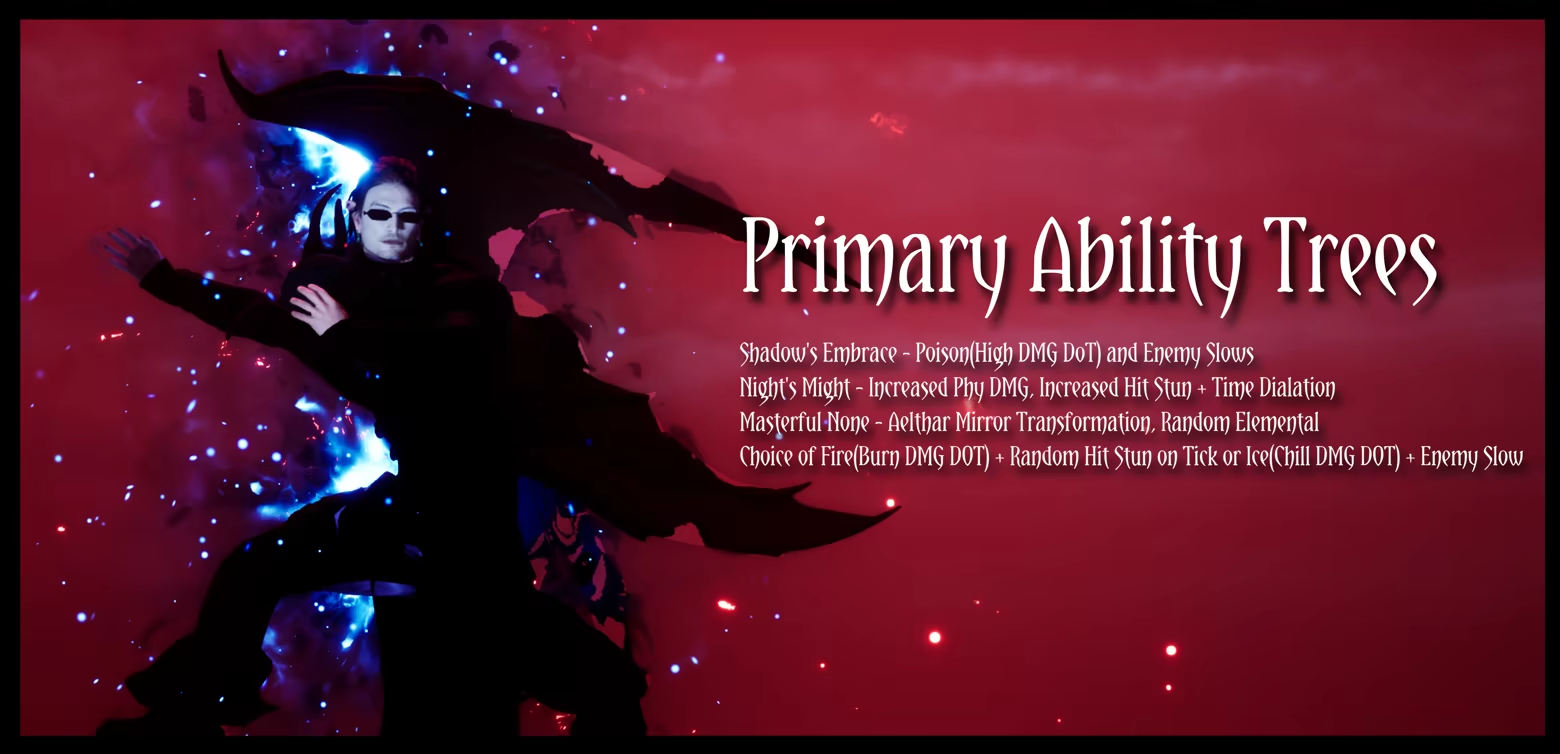
This will not just change the "damage" of the weapons, or even the "look" of the weapons, but also adjust the method to which Aelthar performs his combo's during combat, including enhanced cinematic combat states and finishers.
"The Covens" consist of some of the most powerful vampires within the cities, they are also led by the 3 conversions during Aelthar's time prior to the Eternal Sleep.
These are the vampire leaders, and original betrayers in Aelthar's eyes. "The Covens" control three main Skyscrapers which are part of the final ascent in Grim Pulse: The First Blood, and are accessed from the lower city, Aelthar must work through the lower city labyrinth towards each tower to finally battle each Coven Leader to regain locked memories, and knowledge about the waking world to come.
"The Covenless" are a unique factionless group of Vampires that wander the streets of the upper city. They've been rejected by "The Covens" themself, and are the source of most of the chaos with humans in the city.
As they have been rejected by "The Covens", they are a great source of information regarding The Covens too. Aelthar will not just battle "The Covenless", but also learn from them, through talking, silences(Eavesdropping), and their blood memories.
They are also heavily utilized for Side Quests that will randomly initiate as event/location based activations which players can choose to opt into the Side Quest/Mini-Game or not during open world play.
"The Covenless" are also part of the "Become Immortalized" tier, pledges towards this tier will have a charcter created in their likeness, and based on the tier chosen also outfitted with their chosen style to be represented in the overworld.
Ancient underground, and underwater, capsulated city made of ancient metals and stone. Reinforced with modern day piping, giving a timeless yet gothic grunge vibe. The Underground City is a channel of networked connections all across the North America's, New Orleans connecting to Poverty Point, and also leading to each of "The Covens" Skyscrapers. This is a labyrinth network that Aelthar must not just battle through, but leverage Blood Memories of foes to navigate as navigation tools are void in the Underground City due to the shifting nature of the environment.

Every Skyscraper has 16 total "levels", each with 4 mini-bosses and 1 final boss that comes in two stages. Upon defeating the final bosses, Aelthar is awarded new Memory Unlocks, which provide insights on his next goal within the city, the next Coven Leader to face off against. Each tower climb is quite a long process as the Skyscrapers are not what they seem due to illision magic cast upon the structures warping the reality around them. They are quite a bit more vast than they appear from the outside.
The entire quest series has not just been drafted, but it has already been added into the engine, accessible and readily playable.
This does not include dynamic Side Quests, upon release there will be another 270 Side Quests added, expanding the objective amount towards 3,500 unique and dynamic objectives in the Overworld, and Underground City.
The Overworld has 12 unique mini-bosses.
The Underground City has 14 unique mini-bosses scoped.
The Skyscrapers have 4 unique mini-bosses, and 1 final bosses, x3.
And lastly, the ones that have not been named... The ones who Govern "The Covens", 9 final bosses back to back after completing the tower climbs in the Skyscrapers.
Grim Pulse: The First Blood while yes, it does force the player to "pay attention", for most of the subtle "hints" this does not mean the canon story will be ignored, and not created.
It is believed games without deep cinematics, storyboarding, and depth fall short of the true RPG nature this title aims for.
Grim Pulse: The First Blood should feel like an experience, entertainment, and a movie all at once.
In that notion, over 200 baseline cinematics have been scoped, and over 15 of them completed currently.
There will be no update chasing, "lifts" planned, or changes made to this project. Grim Pulse is locked into 5.6, leveraging all of the modern enhancements found in Unreal Engine. The only reason to upgrade to 5.7 would be for the Iris Network for server structure, but Grim Pulse is NOT multi-player, so this is a moot point.
This gives Grim Pulse an edge, focusing on rapid development over 2026, and 2027 with a fidelity and performance first vision for the project.
Lowest tracked price: CA$9.65 (Jul 7, 2026) · current best: CA$9.65.
Review and player activity for Grim Pulse: The First Blood.
Right now the cheapest offer for Grim Pulse: The First Blood is CA$9.65 at Steam. KingsPrice compares 1 offers from 1 stores — official stores and keyshops — and refreshes prices throughout the day.
The lowest price KingsPrice has tracked for Grim Pulse: The First Blood is CA$9.65 (recorded on Jul 7, 2026). This covers the stores and period we monitor — set a price alert to catch the next drop to that level.
Create a free price alert on this page and KingsPrice will email you when Grim Pulse: The First Blood drops below your chosen price. The biggest discounts usually appear during seasonal Steam sales and publisher promotions — the sale calendar on this page shows the next confirmed event.


